Great Lakes University of Kisumu Advances Inclusive Digital Transformation Through Erasmus+ AAN-DI Mobility in Valencia, Spain
Great Lakes University of Kisumu joined leading universities from Europe, Africa and Asia for the Erasmus+ AAN-DI Blended Mobility Programme at the University of Valencia, strengthening international research collaboration, institutional partnerships and inclusive digital transformation while reaffirming the University’s leadership in advancing accessible higher education.
International collaboration is increasingly shaping the future of higher education, creating opportunities for universities to exchange knowledge, strengthen institutional capacity and co-develop innovative solutions to complex global challenges.
From 17–26 June 2026, Great Lakes University of Kisumu (GLUK) joined partner institutions from Finland, Spain, India and Kenya for the Erasmus+ Capacity Building in Higher Education (CBHE) project, Digital Transformation for Neurodiversity Inclusion in Africa and Asia (AAN-DI), during an intensive blended mobility programme hosted by the University of Valencia.
The mobility represented far more than an international training programme. It reaffirmed GLUK’s growing contribution to global research partnerships while strengthening the University’s leadership in inclusive digital transformation, institutional innovation and evidence-informed approaches to supporting neurodiverse inclusivity in higher education.
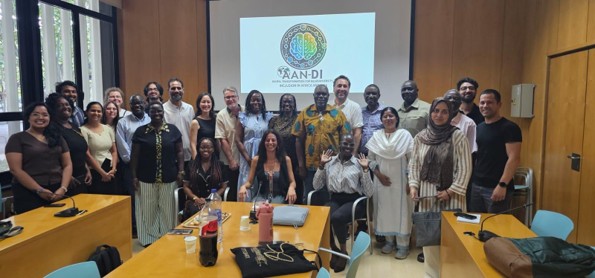
Figure 1. Consortium partners from Europe, Africa and Asia during the closing session of the Erasmus+ AAN-DI blended mobility programme at the University of Valencia.
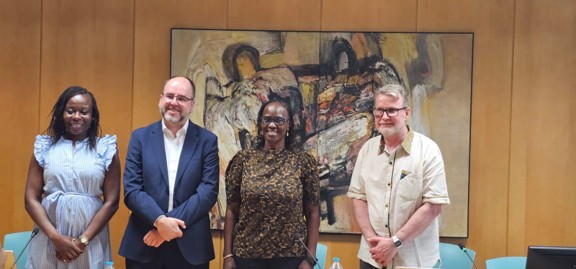
Figure 2. Project and institutional leaders during the AAN-DI Closing Session at the University of Valencia. Pictured are Prof. Susannah Otieno-Leppänen, AAN-DI Project Coordinator and Principal Investigator; Prof. Javier Roca, Vice-Rector for Studies and Quality, University of Valencia; Prof. Hellen Hazel Miseda Mumbo, Vice Chancellor, Great Lakes University of Kisumu; and Prof. Paavo Leppänen, AAN-DI Co-Principal Investigator, closing session on the project's achievements and its future direction.
Building Inclusive Digital Futures
Funded through the European Union Erasmus+ Programme, the AAN-DI project brings together higher education institutions and associated partners from Europe, Africa and Asia to transform how universities support neurodivergent inclusivity through digital innovation.
Rather than focusing solely on technology, AAN-DI seeks to transform higher education systems by ensuring that digital innovation is inclusive, accessible and responsive to the diverse needs of individuals. Through collaborative research, institutional capacity building and cross-continental partnerships, the project is laying the foundation for sustainable digital transformation across universities in Africa and Asia.
At the heart of the project is the development of the NeuroWiz Hub, an innovative digital ecosystem that will integrate accessible learning resources, assistive technologies, digital wellbeing tools, research evidence and professional development opportunities into one collaborative platform serving universities across Africa and Asia.
For GLUK, this initiative aligns closely with the University’s vision of becoming a centre of excellence in research, innovation and community transformation while advancing equitable access to quality education.
GLUK at the Centre of International Collaboration
GLUK participated in the mobility through a high-level delegation comprising
Hazel Miseda Mumbo – Vice Chancellor and GLUK-AAN-DI PI.
Charles O. Wafula – Deputy Vice Chancellor (Academic, Research and Student Affairs) and GLUK-AAN-DI Co-PI
Carey O. Orege – Chair of the University Governing Council
Their participation reflected GLUK’s institutional commitment to strengthening international partnerships while ensuring that emerging technologies are applied in ways that promote inclusion, accessibility and sustainable development.
Beyond attendance, GLUK continues to play a strategic leadership role within the consortium as: Co-lead, Work Package 1 – Project Management and Coordination and Co-lead; Work Package 4 – Sustainable Digital Transformation; Lead institution in advancing project coordination, institutional capacity building and sustainable digital innovation across consortium partners.
These leadership responsibilities position the University at the forefront of coordinating project implementation while contributing to the development of sustainable institutional models for digital transformation.
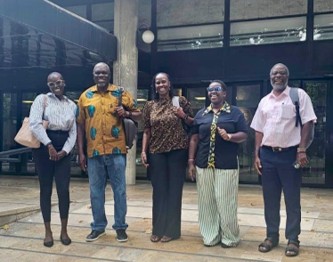
Figure 3. Members of the Great Lakes University of Kisumu delegation at the Faculty of Psychology and Speech Therapy, University of Valencia.
The experience gained during the Valencia mobility will directly inform ongoing implementation of the AAN-DI project at Great Lakes University of Kisumu. Knowledge exchange with consortium partners will strengthen institutional capacity, support implementation of the Work Packages, inform future staff development initiatives and contribute to the continued co-development of the NeuroWiz Hub.
By translating international collaboration into practical institutional action, GLUK continues to position itself as a regional leader in inclusive digital transformation and innovation within higher education.
Learning Beyond the Classroom
Throughout the two-week mobility, participants engaged in an intensive series of expert-led seminars, collaborative workshops and practical demonstrations exploring contemporary issues in: Digital literacy; Neurodiversity inclusion; Educational technology; Artificial intelligence in education; Inclusive pedagogy; Digital wellbeing; Research methods; Sustainable digital transformation.
The programme was intentionally interdisciplinary, bringing together educational researchers, psychologists, neuroscientists, digital learning specialists and institutional leaders to explore how research can be translated into meaningful educational practice.
One of the defining strengths of the mobility was its emphasis on collaborative learning. Rather than working within institutional silos, participants co-designed ideas, shared institutional experiences and explored practical approaches that can be adapted within their own universities.
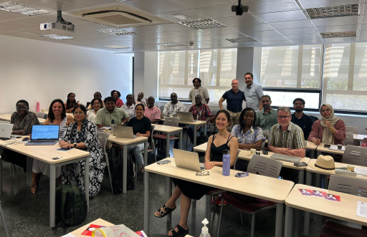
Figure 4. Participants during collaborative learning sessions exploring digital transformation, research methods and inclusive educational technologies.
Research Meets Innovation
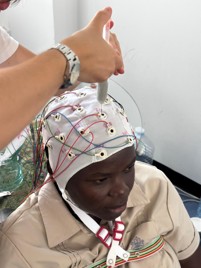
Among the most memorable experiences was the opportunity to visit the University’s neuroscience laboratories, where participants were introduced to advanced technologies supporting research on learning and cognition.
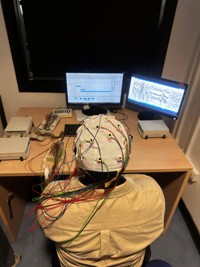
Demonstrations included the use of electroencephalography (EEG) to monitor brain activity, alongside discussions on how neuroscience can inform inclusive educational practices and improve understanding of neurodiversity.
For many participants, the laboratory visit illustrated how scientific research, educational technology and inclusive pedagogy can work together to create learning environments that respond to the diverse needs of students.
The experience reinforced one of AAN-DI’s central principles: Digital transformation must be evidence-based, human-centred and accessible to all people.
Figure 5. Hands-on EEG demonstration illustrating the application of neuroscience technologies in research on learning, cognition and inclusive education.
Growing the Next Generation of Researchers
One of the defining strengths of GLUK’s participation in AAN-DI is its investment in postgraduate research capacity. Through the project, the University is nurturing a growing community of researchers whose work contributes directly to the consortium’s research agenda while addressing locally relevant challenges in digital inclusion and neurodiversity.
GLUK currently has nine postgraduate researchers (five Master’s and four PhD students) undertaking AAN-DI-related research. Their studies span the co-design of the NeuroWiz Hub, inclusive digital teaching and learning, digital personalization, wellbeing and social inclusion, institutional resilience, and data-driven analytics and policy, contributing to evidence generation, innovation and the co-development of sustainable digital solutions for neurodivergent communities.
Strengthening Global Partnerships
Beyond technical sessions, the mobility created valuable opportunities for institutional dialogue between consortium partners.
Working sessions focused on project governance, implementation progress, dissemination, sustainability planning, research collaboration, quality assurance, future mobility activities and the continued development of the NeuroWiz Hub.
These discussions reinforced the importance of long-term partnerships built on mutual learning, shared expertise and collective responsibility for creating more inclusive higher education systems.
A Leadership Voice on Inclusion
A defining moment of the mobility was the closing symposium hosted by the Faculty of Psychology and Speech Therapy at the University of Valencia.
The symposium brought together senior university leaders to reflect on the achievements of the Valencia mobility while setting the direction for the next phase of the project.
Representing GLUK, Vice Chancellor Prof. Hazel Miseda Mumbo joined an international leadership panel alongside
Susannah Otieno-Leppänen
Javier Roca
Paavo Leppänen
to discuss the future of inclusive digital transformation within higher education.
Speaking during the symposium, Prof. Miseda emphasized that lasting digital transformation depends not only on technological advancement but also on strong institutional partnerships, shared learning and a commitment to ensuring that innovation reaches every learner.
“Lasting transformation in higher education is achieved not simply through technology, but through partnerships that place inclusion, research and innovation at the centre of institutional development.”
— Prof. Hellen Hazel Miseda Mumbo Vice Chancellor, Great Lakes University of Kisumu
Looking Ahead
As AAN-DI enters its next phase, Great Lakes University of Kisumu remains committed to translating international collaboration into lasting institutional impact.
The knowledge, partnerships and practical experience gained in Valencia will strengthen ongoing implementation of Work Packages 1 and 4, support future research collaborations, enhance institutional capacity and contribute to the continued development of the NeuroWiz Hub.
More importantly, the mobility reaffirmed GLUK’s commitment to building higher education systems where innovation serves inclusion, research informs practice and every learner has the opportunity to thrive.
Supported through the Erasmus+ Capacity Building in Higher Education Programme, AAN-DI continues to demonstrate the transformative potential of international collaboration in advancing equitable, accessible and future-ready universities.
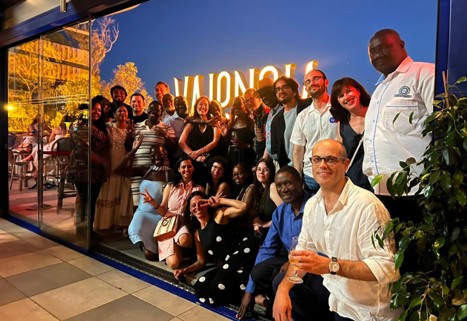
Figure 6. Participants gather for a consortium dinner
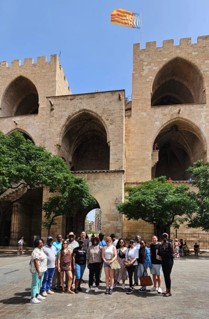
Figure 7. Workshop participants during a guided cultural visit to Valencia's historic city centre
Prepared by:
Naomi Ayitso GLUK-AAN-DI Project Coordinator Great Lakes University of Kisumu